Posted on — 14 Comments

Our favourite female artists (deceased) part 1

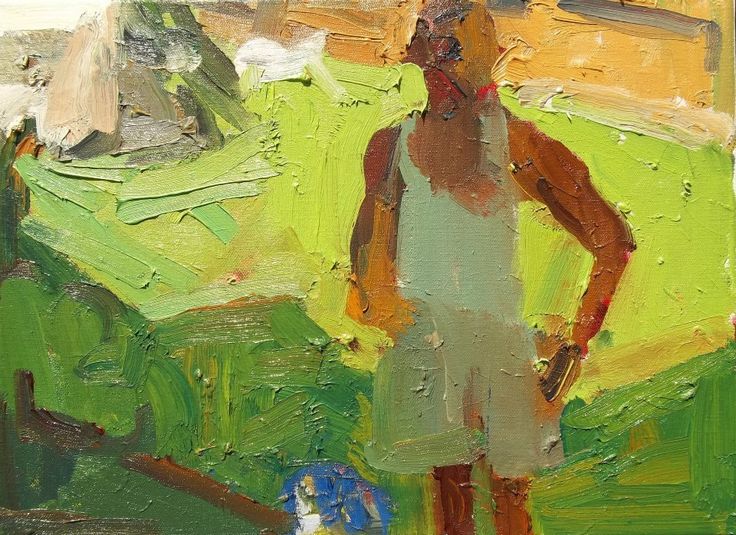
This is going to be a long list so I have split it into several parts. Its based on suggestions that have been made to me via this blog, facebook or in person. I have also found a few more on pinterest that I felt I had to add. These women are all feminist icons in my book as they were breaking accepted ideas of female behaviour and attempting to achieve financial independence. Something that all artists, male of female, dream of achieving today!

The 19th century 

These notable female artists pretty much all all came from wealthy families. They may have gone against convention by carrying on artist careers all their lives but they started from a position of economic and social advantage.

Mary Cassatts was an American painter who was born in Pennsylvania, but lived much of her adult life in France, where she worked closely with her friend Edgar Degas and later exhibited among the Impressionists. She never married but painted exquisite portraits of mothers and children.


Berthe Morisot, came from a wealthy French family and studied drawing and painting as part of her education with her sister. She was so good that she exhibited in 1864 in the Salon de Paris but in 1874, she joined the “rejected” Impressionists in the first of their own exhibitions. She married Eugene, the brother of her friend and impressionist painter colleague Édouard Manet. Interestingly, she carried on painting after her marriage and birth of her daughter, exhibiting under her maiden name.


Eva Gonzales was also French, born in Paris. She was the pupil of Edouard Manet. Like Morisot she continued painting after her marriage but died in childbirth in 1883.


Beatrix Potter – I grew up with her books. She was an English writer and illustrator whose love of nature and animals resonates in her work. There was a delightful film about her early life called Miss Potter made a decade ago. I would say that this film was particularly notable as one of the few films in which Ewan McGregor isn’t deeply irritating! After she married , she continued to write stories and to draw, although mostly for her own pleasure.


Gwen John, a personal favourite of mine. She was a Welsh artist, sister of painter Augustus John. Her family were not particularly wealthy, but they were respectable middle class people (her father was a solicitor). The family had a decidedly artistic bent as an aunt was an water colourists and both parents encouraged their children’s creativity. Gwen studied at the Slade school of Art in London but worked in France for most of her adult career. She struggled for money and was a squatter in a derelict for a time, an artists’ model and largely, despite a number of notable romances (with both men and women), she lived a solitary life with her cat.

800px-The_Cat_-_Gwen_John
Gwen’s cat

Her paintings, mainly portraits of anonymous female sitters, are delicate and initimate works. She stopped painting in the last 6 years of her life.


Laura Knight

Of all our female artists, so far, Laura Knight came from the poorest background. Her family had had money but lost it and Laura (born in 1877) grew up amid financial problems.  Her mother taught part-time at the Nottingham School of Art and had Laura enrolled as an ‘artisan student’ there, paying no fees, aged just 13. At age 25, Laura married fellow artist Harold to whom she was to be married for 58 years.

Self-Portrait_with_a_Nude_by_Dame_Laura_Knight

In 1913 Knight made a painting that was a first for a woman artist, Self Portrait with Nude, showing herself painting a nude model.


During the Second World war she completed 17 paintings for the War Artists’ Advisory Committee. She also painted for WAAC in 1946  The Nuremberg Trial. This painting departs from the realism of her wartime paintings, in that, whilst apparently realistically depicting the Nazi war criminals sitting in the dock, the rear and side walls of the courtroom are missing, to reveal a ruined city, partially in flames. I clearly remember this painting being in the GCSE “History of Germany 1919-1945” textbook I used to teach from in my teaching days.

She was the first woman to have a major retrospective exhibition at the Royal Academy, with over 250.  I love the light and colour in her works. It doesnt matter what she is painting – a village, war work or a nude the colours just ring out. 


To follow: The female artiss of 20th century.


Posted on — 10 Comments

Our favourite female artists (part 3)

I am only including living artists in this list (my husband, pointed out that I had missed Gwen John). These are based on suggestions made to me and a few more that I have discovered on Pinterest. I have enjoyed looking up female artists and found it quite inspirational. Many of these artist work on large-scale pieces and I often lack the confidence (never mind the space) to tackle large works. Certainly, it seems that quite ordinary work can become exciting when it is over a metre in size! I was also interested in the artists who used their work as social commentary, especially the Americans. What makes female artists different from male artists? Is it a lightness of touch? Subject matter. Gone are the day when female artists contented themselves with paintings of flowers and families.

The Australians 

Betty Mbitjana

Betty comes from a family group and community which has produced some of the most famous and influential Aboriginal artists. She is the daughter of famous artist Minnie Pwerle.


Jenny Sages She was a freelance writer and illustrator for Vogue Australia until the 1980s before starting full-time painting in 1985 at the age of 52.


Nalda Searles, works in fibre textiles and her has a strong connection to the Australian landscape.


Wendy Sharpe, is amazing. Her atmospheric paintings have such energy. They love her in Australia too as she one of Australia’s most awarded artists. She has been a finalist in The Sulman Prize twelve times, and The Archibald Prize six times. She has held over 59 solo exhibitions around Australia and internationally.


Americans

Bev Lee, usually works in pastel. Her portraits have a wonderful lightness about them.


Amy Sherald is based in Baltimore (where “The Wire” was set). Her work started out autobiographical in nature, but has taken on a social context ever since she moved to Baltimore.

Anna Valdez, originally trained as an archaeologist, and her still life paintings, especially the very large ones, are bursting with colour.


Toyin Odutola 

Her work explores her personal journey of having been born in Nigeria then moving and assimilating into American culture in conservative Alabama.

My final list will be of deceased female artists and it will include all the suggestions that have been made to me via this blog (as well as a few of my own).

Posted on — 19 Comments

My favourite female artists: Part 2

My first blog focused on American contemporary female painters.  Some of these artists I admire, or just like but I don’t think they necessarily influence my work in the way that the American painters in my first list do. Again most of them are not especially famous but I thought I’d share their names and examples of their work. Apologies for the randomness of this list, its sort of in the order in which I thought of them.

Elizabeth Geiger, another American artist. I absolutely love her treatment of light in her work, with interior and exterior scenes.


Este Macleod, does a lot of designs involving plants and birds but its her still life work that I particularly enjoy for her bold use of colour. They have such presence.

Jo March, does delightful colourful landscapes.

Jo-March-Two-Sisters-Under-The-Hill.jpg


Shani Rhys James  Her work is impressive, often very large-scale and has a powerful presence.

Shani Rhys-James (43).jpg


Zoey Frank 

is one of those artists who makes it look easy. You know it’s not easy it’s just that she’s very, very darn good.

Zoey-Frank-Kitchen.2


Viv Owen is an excellent figurative/portrait artist whose work I have come across on http://www.Artfinder.com.


Finally, one more American, Hope Glangloff whose distinctively colourful portraits remind me of both the work of Lautrec and Schiele.

I’ll probably think of another 10 artists as soon as I post this. If you have any other suggestions for living female artists I love to hear about them.


Posted on — 14 Comments

My favourite female artists: Part 1

The famous ones

I started this list as a challenge to myself really.  I began thinking about women artists and was shocked that I got as far as Tracey Enim and then my mind just went blank. I looked up a few more names on google and added a few more to the list: Jenny Saville, Yayoi Kusama, Brigette Riley and Maggi Hambling. They were important and interesting but I couldn’t honestly say they particularly influenced my work although I love the colours that Riley and Kusama use in their pieces.

I do really like the work of Rachel Whiteread who makes massive casts of the interiors of buildings and other unexpected objects like hot water bottles. She would have been part of Swansea’s UK City of Culture events in 2021.

Then I looked at my pinterest account and realised that it was jammed packed with contemporary female painters. Some I just like and others that inspire me. They are not especially famous but I thought I’d share their names and examples of their work.

The Americans 

Jennifer Pochinski 

Pochinski has a wonderful fluid style. Such energy and confidence to leave so much undefined.e0de9842bcd45ce83115f1405aaff9f2.jpg

Carole Marine 

I love her use of colour and light colour. Since October 5th, 2006, she has been creating one small painting almost every day.

Peggi Kroll Roberts

Again wonderful colours and impressionistic looseness of style that I find very appealing.

Jessica Brilli

A much tighter “stylised” form of painting but that same use of strong colours and emphasis on sunshine.


Leah Giberson

Again strong colurs, sunshine and an interest in mid-century buildings.

She also does a lot of paintings of Airstream trailers but I don’t care so much for those paintings. Although they are technically excellent, I find them less interesting as subject matter.

LeahGiberson_TrailerFlash_0002_1000px_large.png

So, I think you can see that I am somewhat obsessed with sunshine and colour! I will also write a blog on living British female artists that I like.

Posted on — 1 Comment

What a wonderful surprise!

Great Art Pic.jpg

Know how to make an artist happy? Give them art supplies. Stuff to play with. Great Art (whom I buy the majority of my wonderful linen canvases and paints from) sent me a lovely surprise this morning. They sent me an “art box” and a Seasons Greetings card. I am absolutely delighted. The two artists in this house will be fighting over the contents, however, those chocolates are mine! Thank you Great Art!

Posted on — 9 Comments

And the winner is….Coventry.

So it wasn’t to be. Swansea wont be the UK city of culture in 2021. It will be Coventry. How disappointing.

We went down to a venue on the High Street called the Hyst to see the result announced live on BBC TV. There was a lot of excitement and cautious hope. We had to wait 20 minutes whilst we endured what must have been the dullest ever TV show called “The One Show”.

The winner was going to be made at the end of the show. In the meantime, I looked around for clues that it might be Swansea’s night, such as famous artist-media-types or interested journalists. There were none. The few people that looked like reporters looked as bored as we felt having to watch a TV programme interviewing some people about Master Chef (a competition cookery show) and then a segment about a new battleship.  At this point some “livelier” members of the crowd booed the footage of ex-Tory MP, Gyles Brandreth.

GylesBrandreth_1799499b
Gyles – not popular in Swansea

When the announcement was finally made the chap reading it didn’t bother with the usual fake suspense you see on “I’m a Celebrity” of “X-factor”. He just opened the envelope and read it out. Coventry. A massive groan went up! There may even have been few more boos but then a polite round of applause went round for the winning city. If it was decided on the numbers of people each city got to come out to hear the result, Coventry won hands down. There were plenty of people in Swansea but Coventry had a seemed to have lot more maybe, hundreds of supporters. So good luck to Coventry.

We still have plenty of culture here in Swansea but I’m very sad that Michael Sheen won’t get to do his production in Swansea now. It all reminds me of why I don’t get involved in sports, its very depressing when your side don’t win!!

DSC_1464-001.JPG
Coventry celebrates, Swansea looks glum


Posted on — 10 Comments

Swansea, city of culture!

Swansea is nervously awaiting to hear on Thursday if its has been selected as UK city of Culture 2021. We know that no UK city can be a European city of culture thanks to Brexit. Swansea has made the short list before and lost out to Hull. This time the other shortlisted cities are Coventry, Paisley and Stoke (Coventry is the bookies’ favourite at 7/4).

These are all post-industrial cities looking for a boost and Swansea would use the title well. This city is full of talented artists, writers and musicians. There is more to Swansea than Dylan Thomas and Kingsley Amis. These are the things that come to mind (in no particular order). We have a fantastic bay (second largest in Europe) with a very long sandy beach. We have a beautiful art school, two universities, and about 100 artists studios in the town centre, we have the Glynn Vivan Art Galley, Elysium Art Gallery, Mission Gallery, Volcano Theatre Group, Dylan Thomas Theatre, The Dylan Thomas exhbition in the Dylan Thomas Centre, Dylan Thomas house and trail, the Grand Theatre, Nawr experimental music gigs, several music venues in the Uplands, Swansea Museum, the Martime Museum, the Egypt Centre, Gower Festival, Troublemakers’ Festival, Gower Folk Festival, Blue Grass Festival  and I know I have forgotten lots of other things like Premiership football team.

the-grand-hotel-swansea-the-egypt-centreAward winning Egypt Centre

If we win, actor Michael Sheen, has promised a city-wide theatre production like the brilliant “The Passion” Easter production in Port Talbot in 2011. There are many other events planned too.

Passion.jpg
The Passion 2011

There is so much talent here and Swansea would really flourish given half a chance. The bookies have placed us at 10/1 but I have my fingers crossed that Swansea will get to be the first Welsh UK city of culture tomorrow. Pob Lwc, Abertawe!

_98038676_culturecomp1.jpg
Michael Sheen, Rhys Ifans and Bonnie Tyler


Posted on — Leave a comment

Art of Protest (Chinese Style)

I am an arm-chair revolutionary. I shout at the TV and radio and lot and disagree with a lot that is going on in UK politics at the moment. However, in the UK, that’s no big deal. Its quite normal, in fact. However, in most countries around the world, free speech is a luxury and political comment or protest can be extremely dangerous for artists and their families. Badiucao (巴丢草) is a Chinese political cartoonist, who lives in self-imposed exile in Australia. The young artist, like Banksy, hides his identity with a pseudonym. Badiucao is an alias and he also hides his face by wearing a mask at public exhibitions of his work in Australia and the West. The reason for this secrecy is that his work is very provocative and much of it champions human rights causes. In China having strong opinions can land you in prison or at best under house arrest. I was ignorant of his existence until I heard him being interviewed on the radio (BBC World Service)  last week.

He built his reputation on ­social media, though he pulled out of Weibo, the Chinese Twitter, when it began to be heavily censored, and now ranges energetically across platforms, including performance art space and galleries. This year he painted, in Melbourne, in Hosier Lane, a double full-length portrait of Nobel peace prize winner Liu Xiaobo, with his wife Liu Xia, just ­before the human rights activist died in prison on July 13. Liu Xia is currently under house arrest. 

_96913201_liuxiao-liuxiasmall-3 (1)
Melbourne Mural

Badiucao uses satire and pop culture references to get his point across. He often manipulates archetypal images from Communist Party propaganda to make subversive political statements. His work has been used by Amnesty International, Freedom House, BBC, CNN and China Digital Times; and has been exhibited around the world. Although he lives most of his life outside of China, he says that means he has a better understanding of events inside China because he has full access to uncensored media and the internet.

His cartooning technique also borrows from printmaking, he says, and from an older generation of Chinese propaganda. He favours black and red: “China’s complexion … iron and blood”.

Dictators and autocrats famously have no sense of humour and can’t stand being laughed at. President Xi Jinping is no different and cartoon images of Chinese leaders are banned in mainland China. One popular image Badiucao uses is that of Winnie the Pooh, whom apparently has more than a passing resemblance to the Chinese President.

winner-the-trophies
Badiucao cartoon: ‘Winnie the Trophy’

He says “It’s not hard to become a political cartoonist from China because there are only five or six others” — the best-known being 44-year-old Wang Liming, who draws under the name Rebel Pepper and also had to leave China. Wang now lives in the US.

His political work has come at great personal cost. Badiucao has recently given up his Chinese citizenship after he gained Australian citizenship as China does not allow its people to hold dual citizenship. Although he’s out of reach of the Chinese authorities he is still very protective of his identity in case the authorities turn their attention to his friends or family in mainland China.

http_cdn.cnn.comcnnnextdamassets170322121428-badiucao-gallery-show-05
“Dream” is made from the bed Badiucao first slept on when he moved to Australia, and 4,000 individually-sharpened pencils Credit: Badiucao


http_cdn.cnn.comcnnnextdamassets170323113934-badiucao-canceled-passport
“Cancelled” features Badiucao’s Chinese passport, which was invalidated after he gained Australian citizenship. China does not allow its people to hold dual citizenship Credit: Badiucao


2018 Update:

Its hasn’t gotten any easier being a dissident artist. Badiucao was due to have an exhibition in Hong Kong, but it has been called off after threats made by Chinese authorities.  His show was part of events examining free speech in Hong Kong since the 2014 pro-democracy “umbrella” protests.  Badiucao had also been due to take part in a question and answer session at the opening alongside pro-democracy leader Joshua Wong and members of Russia’s feminist protest band Pussy Riot.

Badiucao was going to use this restraining chair of the type reportedly used by Chinese police in his show

The Hong Kong is a “special administrative region”, and although Hong Kong’s system of government is separate from that of mainland China, it is clearly not immune to threats from Beijing. The cancellation comes as a timely illustration of the claims by pro-democracy activists that Hong Kong’s freedoms are being eroded by mainland China.


Posted on — 16 Comments

Still Life?

Morandi-poss-5
Giorgio Morandi – Still Life Blue


“I am essentially a painter of the kind of still life composition that communicates a sense of tranquillity and privacy, moods which I have always valued above all else.” – Giorgio Morandi.


tom-wesselmann-still-life-24-1963.jpg
Still life #24, 1963 by Tom Wesselmann


“The challenge for an artist is always to find your own way of doing something.” Tom Wesselmann (pop artist)


1200px-Still_Life_of_Flowers_by_Adelheid_Dietrich,_1868,_oil_on_wood_-_National_Gallery_of_Art,_Washington_-_DSC00103.JPG
Adelheid Dietrich 


Once upon an time artists were regarded as skilled craftspeople. The purpose of their work was to glorify God and other religious subject matter. The Renaissance changed all that and in Protestant Europe, in the Netherlands in particular, painters had to find new wealthy patrons.

Some artists, like Vermeer, painted beautiful domestic scenes and other painted lush and abundant still lives. In a time before photography, the still life painting was a status symbol. A way of preserving one’s riches in a visual medium.  Long after those flowers had wilted and died, the painting was still on the wall of the patron’s house.

Personally, I have a love-hate relationship with still life painting. I think I associate the painting of still lives with the art I did at school. I suppose it’s because I like the outdoors as a subject as well as lots of natural light.  Here are a few examples from long ago. The first two on the left are done in oil pastels and the fruit with bottle was done in acrylic paint.

I have usually only painted still lives when I have been stuck indoors because of bad weather or winter darkness. It has been very gloomy and wet here lately, So I have been playing around with still lives as a subject matter but I have been dissatisfied with the composition of the pieces I did.

I eventually decided that my view point was too high up. Maybe the problem was that I didn’t know what I wanted from these paintings. Giorgio Morandi was interested in the relationship between the objects in his paintings. Tom Wesselmann’s pop art evoked the wealth of the USA consumer society and drew on the language of advertising.

I liked the utilitarian plainness of the enamel plate, cup and the white tea pot but my objects looked a bit lost on the table. In the end, I decided that my canvas was too big and the viewer wasn’t connected to the objects in the paintings. I needed to be closer and lower down. So I have now come down in scale and view point and toned down the colour, a lot. I ditched the fruit.

It seems to have done the trick. I feel closer to what I am painting. I find that whites against white background are surprisingly interesting (this is coming from  someone who loves bright colours). I like the clarity and simplicity. Painting like this is very challenging for me. You have to be very precise and there’s no where to hide. So perhaps I am coming round to Morandi’s “sense of tranquility” after all!

Bottle and Milk Jug

Milk Jug and Green Bottle


Posted on — 2 Comments

Art of Protest (German Style)

I always admire imagination and creativity. Political protests usually are ignored by the media unless they are spectacularly massive or particularly eye-catching. Remember the anti-Trump “Pussy hat” protests of January this year? Of course you do, they had a “thing”, those pink hats that made the protest eye-catching.

usa-trump-women
“Pussy hats” of January 2017

So I particularly enjoyed reading the story of the latest work of a Berlin-based Collective, called Centre for Political Beauty (Zentrum für politische Schönheit -ZPS). This group of activists and performance artists say they want to expand the notion of what art is. They “blend performance art and politics to end political apathy.” Their projects are always linked to civil disobedience, acts of resistance and participatory engagement with the public. They set out to provoke a reaction. They go to great lengths get one too.

Bjorn Hoche
Bjorn Hocke (AfD)

Their latest work is a replica of the country’s national Holocaust memorial. So what? Its where they built it that’s genius. They built it outside the cottage belonging to Björn Höcke, one of the leaders of the nationalist Alternative for Germany party (AfD) as a protest. Björn caused outrage earlier this year with a speech in which he described the memorial in Berlin as a “monument of shame” and called for a “180-degree turn” in Germany’s attitude to the Second World War… This laughable policy of coming to terms with the past is crippling us.” (Funny, how that raised arm in the photo of Mr Hocke is so different from those in the “Pussy Protest”)

Phillip Ruche
Phillipp Ruch (ZPS)

Philipp Ruch, one of the organisers of the protest, said the protest group had secretly begun renting the property next door to Höcke’s house in the village of Bornhagen in Thuringia, ten months ago, in response to the controversial speech. Then overnight on Wednesday this week, the activists erected 24 massive concrete columns outside Mr Höcke’s cottage.  Ruch said: “The Dresden speech, which ignores any serious argument about the annihilation of six million lives, may have shaken us more deeply than anything… we are slower than the media, but we are also more thorough.”

holocaust-reuters-1120 (1).jpg
The miniature Holocaust memorial installed outside Björn Höcke’s home

“He will now have to deal with the fact that he has neighbours who don’t consider the Holocaust Memorial a ‘monument of shame’, but who try to remember what had happened, to prevent it from happening again. We are doing our neighbourly duty” Ruch said. “We hope he enjoys the view every day when he looks out the window!”

645x344-holocaust-memorial-replica-built-next-to-far-right-politicians-house-in-germany-1511356471194.jpg
Mr. Hocke’s new view

The installation is intended to send a daily reminder to Mr Höcke about the horrors of the Holocaust in which 6 million Jewish people were murdered. On the Centre for Political Beauty’s website, the collective said Mr Höcke should show contrition by “falling to his knees” in front of the memorial (see below for a really good example of how to do it).

Geschichte / Deutschland / 20. Jh. / Bundesrepublik Deutschland / Außenpolitik / Europa / Polen
German Chancellor, Billy Brandt 1970 at a monument to the heroes of the Warsaw ghetto uprising.

The artists launched a crowdfunding campaign in order to keep up the protest action for at least two years, and reached its initial goal of €28,000 (£25,000) by mid-morning on Wednesday. It is now hoping to raise €54,000 to maintain the installation for five years. Asked for his reaction to the protest, Mr Höcke said he would respond “at another time”.

3472