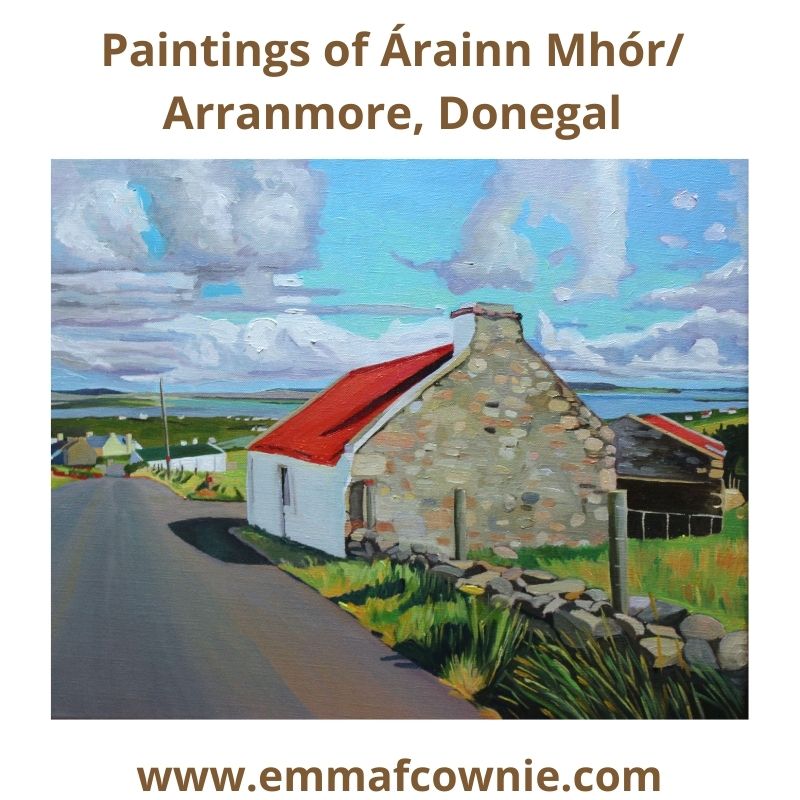
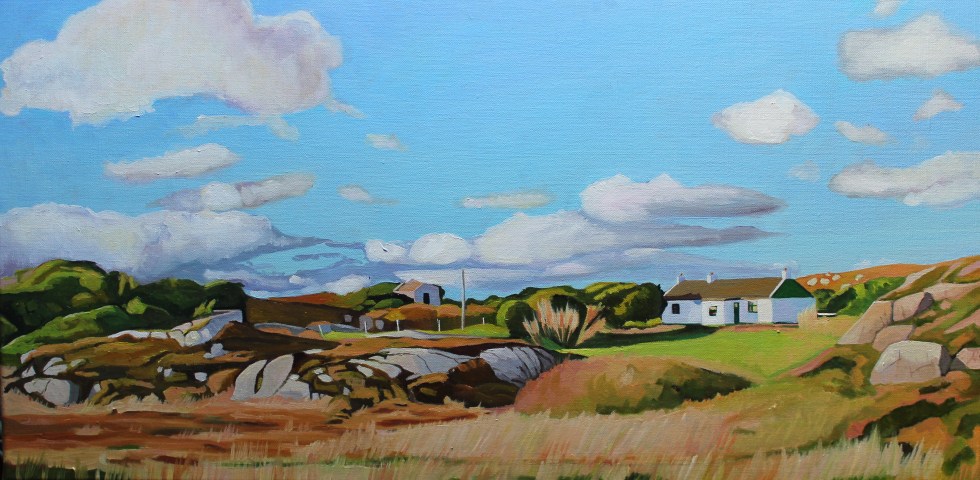
I recently join the Stair Árrain Mhór – Árrain Mhór History Facebook group and was overwhelmed by the positive response I received from the members when I put my most recent post online there. I was asked if I had any more paintings of Arranmore for them to see, so here’s a collection of all my paintings of the Island that I have completed in the last two years.
Where it reads (Private Collection) it means that the painting has been sold. I hope you enjoy looking at them.
After writing about Paul Henry’s work in my last blog, I was embarrassed to realise that I am very ignorant about Irish Art/History, especially female artists. So to remedy this woeful ignorance I set myself the challenge of list of my favourite Female Irish artists, in the spirit of my earlier series of blogs on Our Favourite Female Artists. I initially thought about a top ten but I failed miserably to limit myself to 10, I came closer to 18 in the end. I am absolutely no good at throwing stuff out, and my list of artists is no exception, so I have organised each selection by the date of birth of the artist.
I will freely admit that my taste is pretty traditional, preferring figurative to abstract art but I do like a lively personal life too (I am rather nosy). I also like and admire the work of long-dead artists, especially those who lived and worked in the period from the 1870s to the end of the Second World War. I think that I feel that I can safely admire their work without accidentally copying it, which always seems to be a danger with living artists. A lot of the information in this blog is taken from the Catalogue for Irish Women Artists 1870 -1970 Summer Loan Exhibition and Wikipedia.
It is a universal truth female artists of the late 19th and early 20th centuries worked under very different circumstance to male artists. In 1870 women were seen as amateurs in the art world and lacked the opportunities for training, exhibition and sales. They were chaperoned by men and when in 1893 they were eventually let into professional schools such as the RHA school, they were barred from life drawing and anatomy classes (think of those unsuitable naked bodies!). Despite these limitation (or maybe because of them) many Irish female artists traveled abroad to train and returned to Ireland with wider horizons than their male contemporaries.
Female artists from the Dublin Metropolitan School of Art, c. 1910
Visual arts were seen as a ‘genteel hobby’ rather than a genuine vocation for women. Many of the Irish female artists of this period came from well-off, if not always extremely wealthy, origins. A middle-class Protestant background was more likely to be an encouragement to female artist’s talents, rather than working-class Catholic roots. They also generally remained single and only a few became mothers.
Sarah Purser (1848 – 1943)
Sarah Purser by J.B. Yeats
The female artists of Ireland tended to come from wealthy (usually Protestant) backgrounds. Sarah Purser was no different, as she was born into privilege although she made her own fortune through hard work and canny investments. She was the daughter of Benjamin Purser, a prosperous flour miller and brewer. At thirteen she was sent to school in Switzerland where she learned to speak fluent French and began painting.
When in 1873 her father’s business failed and she decided to become a full-time portrait painter. She used her many social connections to gather commissions – she famously commented “I went through the British aristocracy like the measles”.
She was a trail-blazer in many other ways too. From 1911 she held regular social gatherings for Dublin’s intelligentsia at her home, Mespil House. Sarah became wealthy through astute investments, particularly in Guinness, for which several of her male relatives had worked over the years.
In 1924 she founded the Friends of the National Collections of Ireland and was instrumental in setting up the Hugh Lane Gallery. She was also the first woman artist to be elected a full academician of the RHA in 1925. Elizabeth Coxhead remarked, “At thirty she was the oldest and most serious, with no time to waste on cerebral love affairs and agonies of the soul”. I have a sneaky feeling that Sarah was not interested in men, anyway.
W.B.Yeates, Maude Gonne (A Republican and Suffragette) and Michael Davitt (lying in state), She also painted the not-so famous.
Rose Maynard Barton (1856 – 1929)
Rose Barton RWS (1856 – 1929) St Patrick’s Cathedral Watercolour, 27.5 x 18cm
Tipperary-born Rose Barton began a long relationship with the Royal Water Colour Society of Ireland in 1872 when she first exhibited with them. Three years later she spent some time in Brussels, taking painting and drawing classes, and in 1878 she exhibited for the first time at the RHA. The following year she sat on the committee of the Irish Fine Art Society.
Her watercolours, mainly painted in Dublin and London, are distinguished by an emphasis on the almost tangible atmospheric effects of weather conditions. She became known not only through these original works but also through her illustrated books of both cities
Her version of smokey London was very appealing.
She was a great observer of children. The child in white in the painting on the right isn’t a girl, but George, Prince of Wales!
Gladys Wynne (1876 – 1968)
Gladys was the was the fourth daughter of George Robert Wynne, Archdeacon of Aghadoe, Killarney, County Kerry. She was a watercolor artist, who spent most of her life in Glendalough, County Wicklow, living in Lake Cottage. Landscape was her chosen field and she painted the area throughout her career. It seems that Gladys might have preferred a different life, that of being a wife and a mother as she apparently turned down a proposal of marriage, and regretted having done so. Her work is very chocolate box-ish but I like their gentle character.
Now to two a female artists who interest me because they were witnesses to, and involved in, the Irish Rising: Kathleen Fox and Estella Solomons.
Kathleen Fox (1880-1963)
Kathleen was the daughter of Captain Henry Charles Fox of the King’s Dragoon Guards. She was from an Irish Catholic upper middle class family with a British Army tradition. She attended the Dublin Metropolitan School of Art, studying under William Orpen. As it was almost impossible to get a female model for the nude in Dublin,William Orphen brought girl models from London. He also allowed his students to talk and smoke in his life-class.
Whilst in Dublin, Kathleen got to know Constance Gore-Booth (Countess Markievicz) and Willie Pearse (brother of Pádraig). After 1912 She spent 4 years in Europe, returning to Dublin in 1916, and she witnessed and recorded some of the events of the Easter Rising first hand. She sketched at the scene as Countess Markievicz and her 118 fellow rebels were surrendering to British troops outside the Royal College of Surgeons, St. Stephen’s Green. Conscious of the existing political tension, she completed the painting in secret and then sent it to a friend in New York for safekeeping.
The Arrest of Countess Markivicz
Unlike many of our other female artists, Kathleen became a mother, although as she married at the relatively late age of 37, perhaps she had not expected to do so. Whilst in London, Kathleen had met British army Lieutenant Cyril Pym, and married him in 1917. Cyril was killed in action in 1918, and she gave birth to their daughter later that year. In the 1920s she focused establishing herself as a portrait painter. Her work was shown in London at the New English Art Club, the Society of Women Artists, and the Royal Society of Portrait Painters. She later became known for her paintings of interiors and flowers in the 1940s and 1950s.
Estella Solomons (1882-1968)
Estella’s family, the Solomons, came to Dublin from England in 1824, are one of the oldest continuous lines of Jews in Ireland. Her father, an optician whose practice in 19 Nassau St., Dublin, is mentioned in James Joyce’s Ulysses.
From age 16 she studied Art in Dublin and London. Estella was a committed nationalist who sympathised with anti-Treaty forces during the Easter Rising and Civil War. Her studio in Brunswick Street (now Pearse Street) became a regular rendezvous for Dublin’s artistic and political community, including Arthur Griffith and Horace Plunket. She was a member of Cumann na mBan, an Irish republican women’s paramilitary organisation, and her studio was often raided, leading her to burn portraits of those she harboured, for fear they could be used as evidence against her.
She painted landscapes and portraits, including Jack Yeats, Arthur Griffiths, poet Austin Clarke, James Stephens and George Russell. She later married poet and publisher Seumas O’Sullivan, although her parents opposed the relationship as O’Sullivan was not of the Jewish faith, so they waited until her parents had both died to marry in 1919.
Estella Solomons – A Donegal Landscape
Joan Jameson (1892 – 1953)
Joan Jameson was the daughter of Sir Richard and Lady Musgrave of Tourin, Cappoquin, Waterford and she studied in Paris at Academie Julian. She was a member of the Society of Dublin Painters (founded in 1920) which provided exhibition space for many of female modernist painters. I like her depiction of life of ordinary people, such as fishermen and farmers but also the daily work of womem, as shown in the painting of two women making the bed (bottom right).
Norah McGuinness (1901 – 1980)
Norah was a rebel. She rebelled against her Protestant family of coal merchants in Derry by becoming an artist. Norah won a three year scholarship to study at the Metropolitan School of Art in Dublin at the age of 18. Her family did not approve of her choice to study art and become an artist. I think that she is unique in my collection of female artists in that respect. Norah moved to London to study at the Chelsea School of Art. In 1923 she won an RDS medal and the following year exhibited for the first time at the RHA. During these years Norah supported herself by designing sets and costumes for the Abbey and Peacock theatres and illustrated books. Her travels and her quest to gain artistic knowledge had her travel from France to London, to New York and then finally settling in Dublin.
With Nano Reid (see my next blog post) she represented Ireland in the 1950 Venice Biennale. This was the first time Ireland participated in this international exhibition. Each artist showed 12 works and in Italy at least, the response was positive – the Italian President even bought McGuinness’s painting “The Black Church”. You can read more about Norah’s career here
Norah’s personal life was pretty scandalous by any standards. Norah married Geoffrey Taylor also known as Geoffrey Phipps (a poet – known as the “Irish Adonis“), in 1925 but the marriage was dissolved in 1929, because Norah had been having an affair with writer, David Garnett and Geoffrey started an affair with American poet, Laura Riding. Geoffrey ‘behaved like a gentleman’ in allowing Norah to divorce him in an undefended case. Then the Daily Mail splashed on its front page the judge’s summing up, with vituperative condemnation of the scandalous immorality of bohemian writers.
Laura Riding’s 1934 novel “14A” reads like some crazy bedroom farce, with a ménage à quatre involving writer Robert Graves (“I Claudius” etc), his wife Nancy, Geoffrey and Laura and culminating in both Laura and Robert throwing themselves out of different windows. Laura’s book portrayed Norah as a jealous hysteric and thief. So Norah sued the publisher for libel, and the book was immediately withdrawn from circulation and did not appear in any authorised bibliographical or biographical account until 1976. The Daily Mail was still getting excited about these antics in 2018!
Phoebe Donovan (1902 – 1998)
Phoebe came from a well-off family in Wexford. She began painting as part of a local art group. Donovan grew up on a farm and raised animals and sold eggs to gather the money needed to attend art college. Eventually, she studied Art in Dublin. Sean Keating taught her portraiture. When the Art school closed for the afternoon, she would “make sure to get locked in so I could keep painting; usually still-lifes.”
Her dedication to art meant she never considered marriage. “Art is a full time job – you just can’t live a normal life,” she explained. “I always painted better when I was lonely. Not just alone. Lonely. I put more into it.” Throughout the 1930s and 40s Donovan was a member of the Society of Dublin Painters.
Phoebe Donovan – Vinegar Hill
In this selection, Phoebe Donovan’s work is my personal favourite, largely for her painting of Vinegar Hill. I love the sense of airiness and the treatment of the foliage. This selection of female artists is pretty diverse. Many of them were very determined indiviuals who challenged traditional gender roles by supporting themselves (and their families) through their Art, rather than marrying. Some led quiet lives, others were actively involved in politics. Most of them traveled extensively, and at least one of them was a working mother. For an fascinating personal life and good old front-page scandal, though, you can’t beat Norah McGuinness. Actively rejecting contemporary social conventions, these women independently pursued their own goals as artists, educators and pioneers.
Finally, I managed to scale the steep steps to my attic studio! One step at a time. Holding on the handrails.
Ah, what pleasure it was to be back in the attic. It has a view out the back of the house. It is a great pleasure to look at the wooded parks and hills of West Swansea instead of the unrelenting concrete streets and terrace houses out the front of the house. I have a number of commissions to fulfill but I wanted to “warm up” with some small paintings first as I have been working with watercolours for the past two months. Here’s a selection:-
Table Mountain (Crug Hywel)
My first reaction to oil paint was how slow it all is in comparison with watercolours. With watercolours, most of the effort goes into planning and preparation and then the execution of the painting itself is quick. Putting oil paint on the canvas was more laborious that watercolours. I also had to rummage around for looking for the right sort of paintbrushes, a few times. I could not quite lay my hands on what I needed. But, ah! The paint did what I thought it was going to do. What joy! If I changed my mind about a composition or decided that something did not work I could wipe it off the canvas. It did not reproach me for making a mistake by showing it to the world for ever! Nice!
Anyway, I sat down and started a series of new Donegal paintings. Here they are.
Wee House on Gola, Donegal (SOLD)Storm Over Inshbofin, Ireland (SOLD)
The Two Tin-Roofed Sheds, Arranmore, Ireland
Blue Door, Gola (SOLD)
The Old Stone Shed Arranmore Ireland
These paintings are from the past few weeks. I have also worked on two commissions. It has been slow work at times as I often need a lunchtime nap to keep my energy levels up. I do my rehab exercises several times a day which can be very tiring. On a positive note, I finally got to speak to a physiotherapist, Josh, who has been very helpful. He has posted exercises to me and giving me guidance on how much to do. I can walk upstairs reasonably well, but downstairs one step at a time. When I get tired my ankle gets sore and I limp. I try and avoid that if I can.
What did I learn from watercolours? That I can and should edit and play around with compositions more. I simplified my images as much as I could. I changed the skies or left out an inconvenient house. I found this freeing and I brought an element of this to my oil paintings. For some reason, I have felt to need to be truthful to the real-life locations I painted. I realise now that I don’t have to. I can happily leave out a telegraph pole or a lamp post if it confuses the composition.
Wren
Watercolour painting of robin
What do I miss about watercolours? The tidiness. Clean clothes and hands. The lack of chaos. The speed. The brushes that don’t wear out by the time you have finished a large painting. The lightness. They convey the lightness of birds better than oil colours. Also the convenience, I could pack away all my paper, paints, and brushes in one big bag. I am looking forward to using them outside when I can walk much longer distances!
Watercolours are not usually my thing but circumstances have changed that, for the time being. When I came out of the hospital after my operation to fix my broken left leg, I knew that I going to off my feet for at least 6 weeks. I also knew that it would probably take another 2 to 3 weeks to be fully mobile again. I had all sorts of vague ideas about oil painting again but when I got home I realised that they were hopelessly impractical. My house is full of steep and narrow stairs, so that meant I was going to pretty much confined to my bedroom.
My husband, Séamas, went to a lot of effort to set up the bedroom ready for me. He dismantled the round kitchen table and reassembled it in the bedroom. He also brought up an armchair and two dining chairs for me to sit on and rest my recovering leg on. The table is not very big so that means that the only sort of paint I can hope to use in this limited space are watercolours.
Organised chaos on the ex-kitchen table
I have a love-hate relationship with watercolours. They are portable and come in cute little boxes but they are the least forgiving of all mediums. If you make a mistake it shows. I used to dabble in them many years ago but I always prefered to use acrylics, oil pastels and oil paints, because with all of those mediums you can scrape back or paint over mistakes. Not so with watercolours. They show you up are the second-rate artist you fear you are!
Cloughcor Cottage Arranmore
In my first efforts with the watercolours I used them in pretty much the same way I always had done.
Whilst I was reasonably happy with the foliage and grass in the picture, I thought the sky was too muddy.
Crug Hywel, Brecon Beacons
I decided I needed some technical help. So I got Séamas to go up to the attic and dig out my tiny Collins Gem book on Watercolour Tips by Ian King. What a marvel this book is!
It has many excellent pointers on mixing watercolour paint, making washes, the translucent nature of some colours, as well as the importance of simplifying the composition.
Four sketches of Table Moutain
So I took these points on board, in particular the importance of simplifying the image. I realised that less is more. It changed what I painted. I was much happier to edit my compositions in a way that I don’t usually in my oil paintings. So I decided to simplify my compositions as much as possible and paint a series of studies of the houses on Gola Island.
I was cautious, however, of unintentionally taking on another artist’s style of painting. I wanted the skills but not the style. I didn’t want to paint like these watercolourists, I wanted to paint my way, but in watercolours. I also wanted to keep the paint as “light” possible to keep the painting looking fresh and airy.
Gola Houses (watercolor)
It might sound odd, but I wasn’t familiar with the properties of the colours in my paint-box. Blue watercolour paints act differently to blue oil paints. I needed to experiment and learn how they were different.
In the end, to help me understand what each colour could do I painted each one on a piece of paper so I could look at it when deciding which color to use. This helped me enormously.
My watercolours
I also struggled with how to paint a “simple” wash for some time. One online artist recommended mixing up a lot of paint so that it was “like tea”. This did not do the trick for me. I was reassured by another artist that washes were actually pretty tricky and some colours were harder to use than others. I found this reassuring. I helped me keep perservering. There’s nothing like someone saying “Oh, but it’s easy” to make you want to give up when it’s not easy!
Eventually, after a conversation with my mother (who was a keen water colourist), I tried a different brush and also several pots of water. One to rinse my brush in, the others to dip my brush into before I put it in the watery paint mix. That seemed to work for me. I felt slightly more in control of the process and my skies were less lumpy.
I have a long way to go but I am lot happier with my paintings and I hope that I can use these skills to paint “en plein air” when my leg is better it is safe to go outside again, whenever that will be. Until then, I will keep practicing!
Post Office at Baile Ailean
I would like to thank Séan Ó Domnhaill for the use of his photographs of the red-roofed Post Office on the Outer Hebrides and the Isle of Lewis.
A while back I came across a quote on the internet that has stuck in my mind:- “If I knew the world was to end tomorrow, I would still plant an apple tree today.” I was quite struck by this sentiment, especially in the light of current events.
I could not remember who said it. So I did some research. I was intrigued by what I discovered online. I found a number of statements:-
It was originally said by Martin Luther, a 16th century German monk
It was originally said by Martin Luther King Jnr, the 20th century African-American Civil Rights Campaigner.
It wasn’t said by 1) or 2)!
This puts me in mind of one of my favourite internet memes by that teller-of-truth Abe Lincoln…
Just joking!
The apple seed quote apparently originates in Nazi Germany in the 1930s, in the Protestant Confessing Church, which used it to inspire hope and perseverance during its opposition to the Nazi dictatorship.
To be honest, it doesn’t matter who said or when (although there’s a lesson about taking things at face value there) because I like the sentiment. No matter how dreadful things seem, they will pass. Eventually.
Here is my apple seed for this week.
The Road by the Loch, Ireland (80x60cm/ 31.5×23.5″)
This is a follow on from my last post about composition and large landscape paintings. Included a small study of a view of Arranmore, Donegal. The study used a diagonal composition.
Study 10cmx14cm (SOLD)
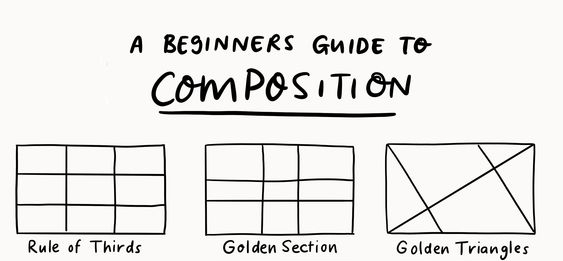
A Beginners Guide to Composition (Diagonal Composition)
When it came to a much larger painting (60x80cm – approx 24″ x 32″) I decided on a slightly different composition. It wasn’t that I didn’t think the small painting worked, because it did, but because paintings in the “landscape” format are more popular with collectors than those in “portrait” format. It might have something to do with wall space, I am not sure. If you are not sure what “landscape” and “portrait” format is, it’s just about which round the painting is positioned. “Landscape” has the longest side along the bottom, “portrait” has the shortest side along the bottom.
Landscape format allowed me to include the sweep of the hill as it fell away from the viewpoint towards the sea. This composition used the rule of thirds, so the painting has a different energy to the study.
Beginners Guide to Composition (rule of thirds)
Down the lane, Arranmore (SOLD)
The position of the viewer is slightly different, it has moved to the left and so more of the house in the foreground can be seen. The larger painting also has a red tractor in the lane, which the study did not, which draws the eye down the lane: hence the title.
Detail – Tractor
I particularly enjoyed painting the different textures of crops and grass in the field that were not visible in the study painting. The widened composition also included the large cross on the shore to the left. I did not realize it at first but the wall in the corner of the painting is a graveyard wall. This is the graveyard of St. Crone’s chapel. Saint Crone was a sixth-century Irish saint descended from King Niall Noígíallach (‘of the Nine Hostages’) and a contemporary of Saint Colmcille (St. Columba of Iona). Saint Crone was very active in the Rosses area. The parish of Dungloe on the mainland also takes its name from her; Templecrone.
Detail – The Cross
So executing a study can be a useful tool in thinking about the composition of a larger work. It will show if a composition works or not but it can also suggest improvements and variations. Interestingly the study is a painting in its own right, it has a different, lighter feel to it. Small paintings often take just as much thought and effort as larger ones even if they are quicker to execute.
My PC just crashed. I am not sure if that’s a result of the effects of Storm Dennis (we had downpours all night long here) but I am going to stop here!
Failures are always a challenge. When I used to be a Secondary school teacher, I always learned more about teaching when I faced a difficult class than a nice docile one. They made me go away and think about what I was doing and how I could do it better. Painting is no different.
I have been thinking about the composition of larger paintings. When I used to think about painting a scene I used to think in terms of “that’s a small painting, it won’t “stretch” to a larger canvas”, or “That’s a mountain, definately, therefore, it’s subject suitable for a large canvas”. I am parodying myself somewhat but generally, I have this feeling that small birds belong on small canvases and big landscapes belong on larger ones.
My thinking was challenged by a commission I did in the summer where a client asked for a very large version (120 x 90cm) of a relatively small painting (41 x 33 cm). So I scaled up and despite my anxiety, it worked. This was important as my confidence had been dented by a previous large landscape painting that hadn’t work out for me.
Small and Big Versions
It got me thinking about composition. I understood the basics and had looked of compositional grids in Artbooks as a teenager and thought I’d internalized them. I realized that I had got sloppy. I’ll explain.
A Beginners Guide to Composition
I am not going to do an information dump about theories of composition here (I have added links to some good blogs on the subject below) but the “rule of thirds” is one that springs to mind here. The idea that you should look for naturally occurring in divisions of thirds in a scene and try and locate points of interest at the intersection of the “Golden section”.
Rule of Thirds
The Golden Section
I had been influenced by ideas of composition from photography and the work of artist-turned photographer, Henri Cartier-Bresson,in particular.
Rule of Thirds – Henri Cartier Bresson
I liked his use of diagonals in particular, and this has influenced my paintings of urban scenes.
When I came to Donegal I was so blown away by the vast overarching skies and majestic landscapes. I got very excited by everything I saw. I tried to capture everything. The houses, the mountains, the sea, and the sky. Most of the time it worked.
Swirling Clouds Round Errigal
Donegal Painting
From Ferry Coll
From Cruit Island
Wild Wind Across Dunfanaghy
Shored up near Muckish
Further Up Shore
You can probably look through these paintings and tick off the composition approaches I instinctively used; the diagonal, the pyramid, the rule of thirds and so on. They all worked.
Then, it really pains me to admit it. I lost it. I got carried away and overreached myself and painted this big beast.
Sailing By Edernish
What was I thinking? There is far too much sky in this painting. Worse than that, it was a large canvas. There are things I like about the painting, the light on the island in the bottom half of the painting, but the sky was just too vast. It pained me that I had such a large reminder of my errors of judgment. I don’t mind screwing up every now and then but I hate waste and that was an expensive canvas. It’s no coincidence that I am planning a blog post on reusing stretcher bars to stretch my own canvases.
My confidence was dented. It put me off large paintings for quite some time. It wasn’t until I did the commission I mentioned earlier, that I got thinking about what had gone wrong. I realized that I had to rigorously apply the same rule of composition to large canvases as I instinctively did to my small ones. So I tried an experiment, I took a successful composition of a medium size painting and did a much larger version of it. This composition was based on a compound curve.
Over to the Rosses 60x40xmView From Arranmore, Ireland 92x73cm
It wasn’t a copy of the smaller painting. It wasn’t meant to be, although it was meant to encapsulate the same feel of the smaller work, with some adjustments. I have included some more detail, changed the tree, and added a shadow and a ditch in the bottom third of the painting. I think it worked.
I have since done another small oil sketch of another composition before I scale it up. It’s another diagonal composition. Although, the larger version will not be “portrait” format but my usual “landscape” orientation.
I will add the larger version later in the week. So you will have to wait to see if that composition works as well as this smaller one. Watch this space!
Autumn brings incredible colours to the west coast of Ireland. As the grass and bracken die off, they turn a fantastic shade of orange and pink. The pink granite rocks that litter the landscape accentuate the warm colours. They have provided me with much inspiration for my landscape paintings of Donegal, Ireland.
This series of paintings has been inspired by the Old Railway Walk which starts near Burtonport, near Dungloe in Donegal. There are no railways in Donegal anymore. There used to be. The line to Burtonport was built in 1903 as a joint venture by the British government and the Londonderry & Loch Swilly RailwayCompany to attempt to alleviate poverty in north West Donegal.
Steam trains at Burtonport, Donegal
The trains used to carry fish from the port at Burtonport in Donegal to Derry, in the neighboring county. It also carried many seasonal workers to and from Derry and Scotland. After 1922 the line crossed from one country into another; from the Irish Free State into Northern Ireland.
Railways in 1906: Credit: Donegal Daily.com Gweedore train station (Mount Errigal in the distance)
In the 1940s, however, the Irish government decided to close down the railways in Donegal. I have never really found a clear explanation for why this happened but I am going to assume that the cost of running the line was an important factor. There were also concerns about the safety of the line.
Owencarrow Viaduct, Donegal
In January 1925 disaster had occurred on the at theOwencarrow Viaductwhen winds of up to 120mph blew carriages of the train off the viaduct causing it to partially collapse. Four poor souls lost their lives.
Owencarrow Viaduct
After the Second World War, the Irish government presumably decided it would cost too much to continue the maintenance of the line and it was closed in 1947. The Burtonport-Gweedore section closed in 1940. There is a great graphic on the Donegal Daily hereillustrating the shrinkage and disappearance of the railways. Donegal became a very remote part of Ireland, with no railways and no (still) motorways. Communication with the area improved in 1986, however, whenDonegal airportstarted operations.
It seems that for half a century nothing much happened on the old railway line. In 2009, however, there was a heavy snowfall, and some of the old railway line was cleared to access water mains that needed repairing. The remaining section was later cleared and gradually developed as a walkway with the support of the local community. A massive effort has gone into creating this beautiful and peaceful walk.
The Burtonport Old Railway Walk
Here are some of my paintings inspired by my husband Seamas’s photographs of the railway walk.
There are many features of the old railway remaining which you can view along the way such as stations, gatehouses, accommodation crossings, lots of pillars, cuttings, embankments, a bridge and rusty gates. There are also lots of shelters for walkers to hide from passing showers to use.
dav
Photo credit: James (Seamas) Henry Johnston
Youtube video- Siúlóid an tSean Bhóthar Iarainn—The Old Railway Walk by Ralph Schulz.
Find out more about the Railway Walk by clicking on the links below:-
Getting here: From Letterkenny and Dungloe – SITI Rural Transport – Tel 0749741644. From Dublin – Bus Eireann@ www .buseireann .ie From Scotland & Northern lreland – Doherty Travel (00353) 749521867
The landscapes of Donegal, Ireland have provided me with so much inspiration for my art I thought I’d share some background about our house just outside Burtonport. My husband, Seamas, has spent far more time and effort than me on Meadow Cottage. Thus, this blog post is a bit of a photo-essay as I have been absent for about half of these events. I have stayed behind at home in Wales, feeding our pets and keeping the Art business ticking over.
1. I thought I’d start with the Estate Agent’s photos. In Ireland, estate agents are called auctioneers, in the US I think they are known as realtors. Kenneth Campbell’s aerial photos are great, and doesn’t the yellow gorse look pretty? I changed my mind about gorse, later. What attracted me to the house (other than its location near Donegal airport, as well as walking distance from Burtonport, the ferry to Arranmore Island, a garage shop and Dungloe a short drive away) was the fact that unlike many Donegal homes, it had two rooms upstairs. Why do I care about an upstairs? Well, firstly I have only ever lived in a house with stairs and secondly and more importantly the light is better to paint by. Especially if it comes from a north-facing skylight. That will provide steady cool light. There was no north-facing sky-light only south-facing, but that could be easily changed
In our first spring visit, we concentrated on essentials for the cottages. Thankfully the previous owners were very generous in including a lot of furniture with the cottage so we just had to think about buying things like pots and pans and bedding. We started to explore the area. There was a large area behind the rocks which was overgrown with gorse and brambles. We made some inquiries about getting someone in to do the garden, but they didn’t quite come to anything.
2. Summer visit. Everything had grown. A lot. The grass was now waist-high! The brambly bit of the garden at the back now looking like something out of a sleeping-beauty nightmare.
We looked around at the gardens around us and saw a lot of neat lawns and hedges. Oh dear, we were the neighbourhood scruffs. We had a lot of work to do here. We had brought an electric grass-strimmer with us. It wasn’t much good. There was just too much grass. Even after Seamas had cut it was still a foot deep! Steep learning curve! We bought a petrol strimmer and Seamas studied it carefully. He would be back!
Mizty in the grass (after a trim)
In the mean-time, we hacked away at the biggest interlopers in the garden. There were a couple of fir trees that had spread their seedling all over the grass and were also sprouting up through parts of the drive. They were also blocking the view of drivers pulling out of the side road onto the road to Dungloe. They had to go. I hacked down one with a hand saw and Seamas and I cut down the larger one together (you can see it behind him in the photo below).
Seamas cutting things down
We painted things like fences, walls window sills and the gate.
We can see clearly now…
The cutting things down then extended (rather belated in our stay) to cutting back the gorse. There had been gorse fires in the spring that had been extensive and destroyed one family’s holiday cottage. It had been an important source of income for them. So I wanted to get rid of the gorse near the cottage. It had grown so much that it came up to the back windows of the cottage. We hired a skip and started to fill it. It was hard work. I am not used to it. Still, we got stuck in.
The encroaching gorse
It’s springy stuff. I jumped up and down on it a lot.
We filled it up and when the skip was collected by Paddy Sharkey, he managed to jam a fair bit more in the skip and jump on it.
It was back-breaking stuff. What you needed, Paddy said was a “man with a digger”. We got the number of the man-with-a-digger, and a lot more besides, Tom Ham, and he called round to look at our rocks and gorse. Yes, he could do something with it, in about 6 weeks time. So we left for Wales, with plans.
3. Seamas came back in the to autumn to report back on some improvements he’d arranged to be done whilst we were away. Pauric Neely had put clear glass put in the front door to let light into the hallway.
New front door
Seamas painted the back of the house and got the hang of the petrol strimmer.
4. Seamas’s winter visit. Part 1- More changes: – a new north-facing skylight put in by Paddy Campbell. Yeay. Light to paint by!
New glass in the back door – so we can see the jungle outside!
Best of all, Tom had removed the gorse by the back of the house. It was gone!
Just lovely pink rock!Thank you, digger!
That was great. The brambles were still lurking behind the rock. That was the next stage of the project. It was somewhat fortuitous then, that Seamas’s flight was canceled. He actually went to the airport and waited for his flight. He watched the two-engine plane starting the approach to its landing but very strong cross-winds prevented it from landing. So it returned to Dublin!
Part 2: – Seamas decided to stay another week for the next stage in the work. This was clearing the land behind the rocks and preparing the foundations to put in a couple of wooden clad cabins to act as an art studio and an art gallery. This was a lot of work.
We can see the fabulous pink granite rocksThere’s a lot of rock
Finally, the brambles are gone.
There’s a lot of land here!
The path by the house is finally clear
Seamas has achieved a massive amount over the last year. He’s so happy when he’s in Donegal. He loves our cottage. He is never happier than when he’s working on it. There’s a lot more to do. He has more plans that he’s hatched with Tom, that I am looking forward to happening. I think that when I am back in the spring that I will be planting a lot of grass seed! I am looking forward to my second year and hoping to spend much more time here.
I would like to thank Kenneth Campbell, Pauric Neely, Paddy Sharkey, Paddy Campbell, Lucy of the Parlour Shop, who drove up from Killybegs on a Sunday evening (with her mum) to deliver a table and last but definitely not least, Tom Ham, for all their excellent work.
Update: June 2020 we had a portacabin art studio (designed by Séamas and Stephen Primrose) and built by H.E. Haslett Co. Ltd of County Tyrone delivered. It looks great. If you are wondering, the giant window which is positioned to for the northern light, is round the other side.
Portacabin Art Studio
As you can see the garden has GROWN! I hope the insects and wildlife are all enjoying the overgrown garden. My broken leg and the pandemic prevented a another visit (and a lot of gardening) in 2020.
I am really looking forward to using this studio later this year (all going well with vaccinations, fingers crossed)!
I had been trying to finish it but the weather and the light were so bad here in Wales over the weekend, I had to leave it until Monday. I struggle to see greens in poor light and as the grass at the bottom of the painting was so important to the success of the image, I decided to wait until I could see it.